A transformer test bench is a decision about workflow, not only about instruments. The same test items can be produced by a rack of portable units and a set of clipboards, or by an integrated bench that sequences the tests, switches the connections and produces the certificate. The difference shows up in cycle time, in the number of ways a technician can mis-wire a step, and in how much of the acceptance record has to be reconstructed afterwards.
This guide covers what a bench has to automate and document, which test items belong to distribution and to power transformers, how capacity and voltage class set the size of a system, and what a supplier needs from you before a configuration can be quoted. Test methods are referred to by their published standards, and the equipment is described as built to the standard the buyer specifies.
What a transformer test bench has to automate and document
At minimum, a bench has three jobs. It has to apply and measure the quantity a test requires — a DC current for winding resistance, a low-voltage excitation for turns ratio, a variable AC source for no-load and load loss, a high-voltage source for dielectric tests. It has to do that through a switching system, so the operator is not re-cabling between steps and the sequence cannot be run out of order. And it has to capture each result against the unit under test, so the acceptance record is produced during the test rather than typed up after it. The practical target is that a routine test program for one transformer can be started, run and reported with the transformer connected once. Where that is genuinely not achievable — for instance between a loss measurement and an impulse test — a bench still earns its place if it removes the intermediate, unaudited handling steps.
Test items for distribution and power transformers
The two classes are not tested to the same depth, and sizing a bench to the wrong class is the most expensive mistake in this decision. Distribution transformers are normally accepted on turns ratio, DC winding resistance, insulation resistance, no-load loss and current, load loss (short-circuit impedance) and a power-frequency withstand or induced-voltage test. Insulation levels and dielectric methods come from IEC 60076-3 and GB 1094; the loss measurements are defined by IEC 60076-1; the impedance measurement by IEC 60076-5. Power transformers add the items that need more source capacity and more time: temperature-rise tests, partial discharge measurement per IEC 60270, dielectric loss and capacitance, and often a winding-deformation check. Field acceptance in China is normally organized around GB 50150, while factory routine and type tests follow the IEC 60076 series or GB 1094 as the contract specifies. A bench designed for one class rarely scales economically into the other: the high-voltage side of a power-transformer bench is a different construction, not a larger version of a distribution bench.
| Test item | Distribution transformer | Power transformer | Method reference |
|---|---|---|---|
| Turns ratio and polarity | Routine | Routine | IEC 60076-1 / GB 1094 |
| DC winding resistance | Routine, all windings | Routine, all windings and taps | IEC 60076-1 / GB 1094 |
| No-load loss and current | Routine | Routine | IEC 60076-1 |
| Load loss / short-circuit impedance | Routine | Routine | IEC 60076-5 / IEC 60076-1 |
| Insulation resistance | Routine | Routine | GB 50150 (field acceptance) |
| Dielectric / withstand | Power-frequency, per class | Power-frequency and impulse per class | IEC 60076-3 / GB 1094 |
| Temperature rise and partial discharge | Seldom on a routine basis | Common, and decisive for bench sizing | IEC 60270 (PD); temperature rise per contract standard |
Portable instruments, a bench system or an automated line?
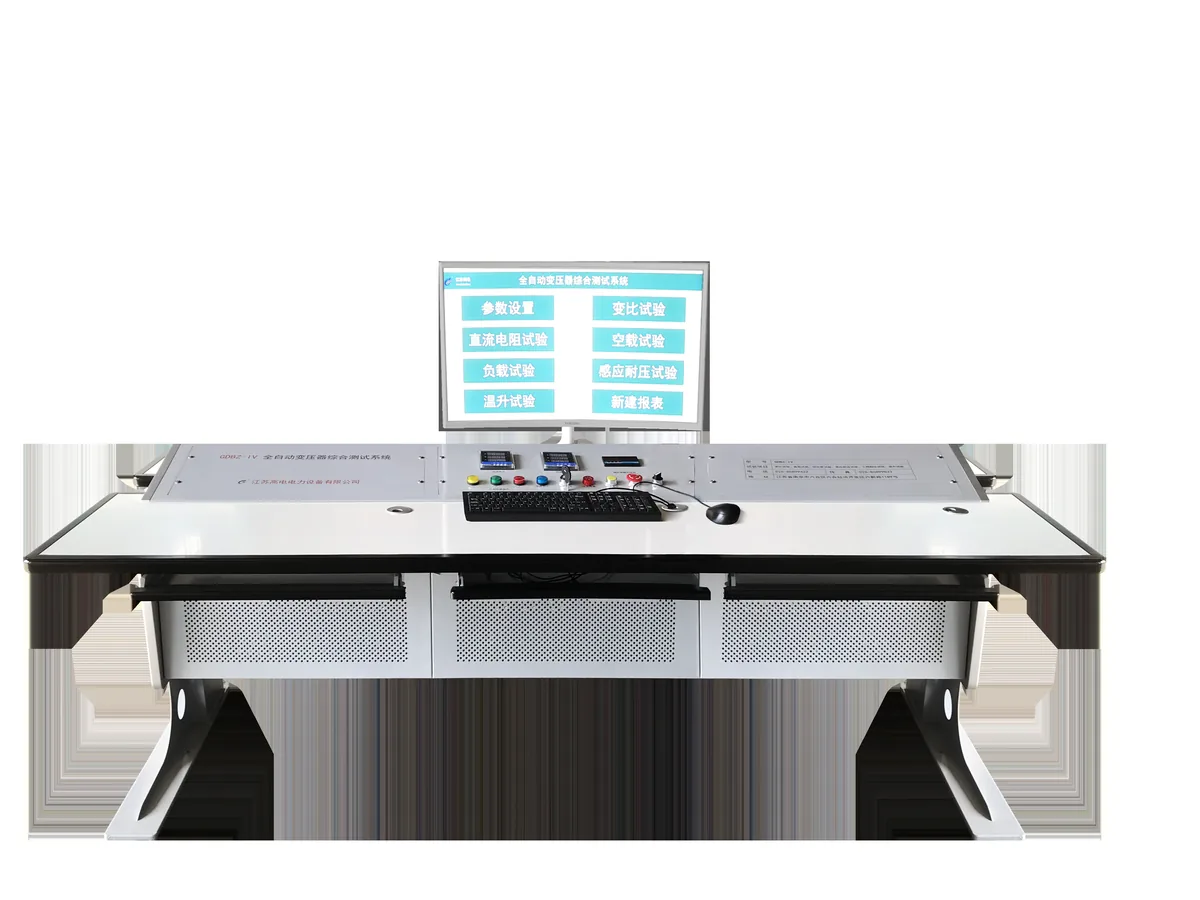
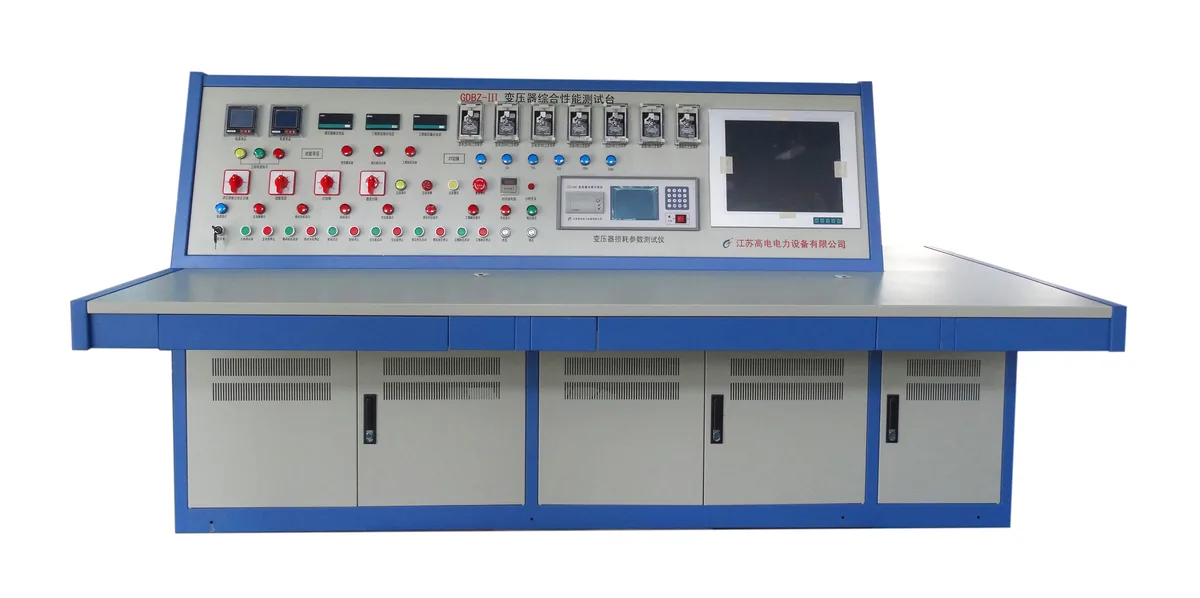
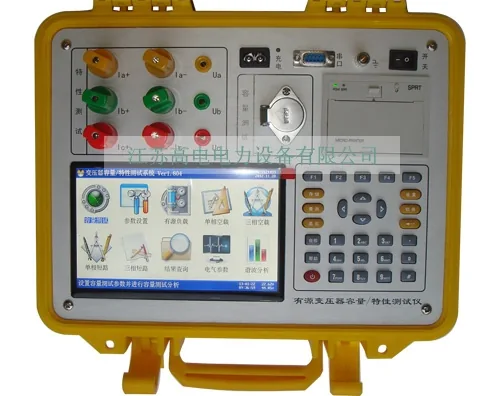
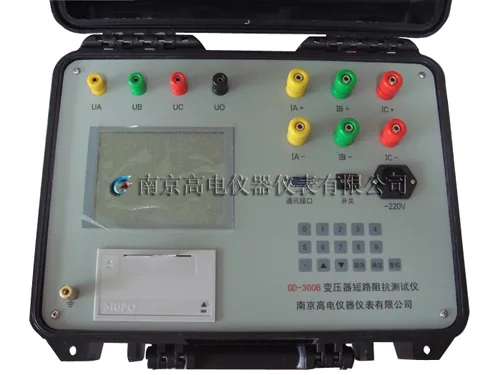
The three configurations answer different questions. A set of portable instruments answers the question "how do I test this transformer where it stands?" and is the correct answer for commissioning, maintenance and fault investigation. An integrated bench — the GDBZ series is an example of that class — answers "how do I run a routine test program on one unit efficiently and produce a record?", which fits transformer factories, repair workshops and service laboratories with a mixed population of ratings. An automated line answers "how do I run the same program on many units per shift with minimum operator involvement?", which fits volume production where the capital cost is justified by cycle time and by removing operator-dependent variability. The choice is mostly a function of units per shift, of how many items are on the routine sheet, and of whether the test comes to the transformer or the transformer comes to the test.
| Configuration | Typical test scope | Best fit | Practical limits |
|---|---|---|---|
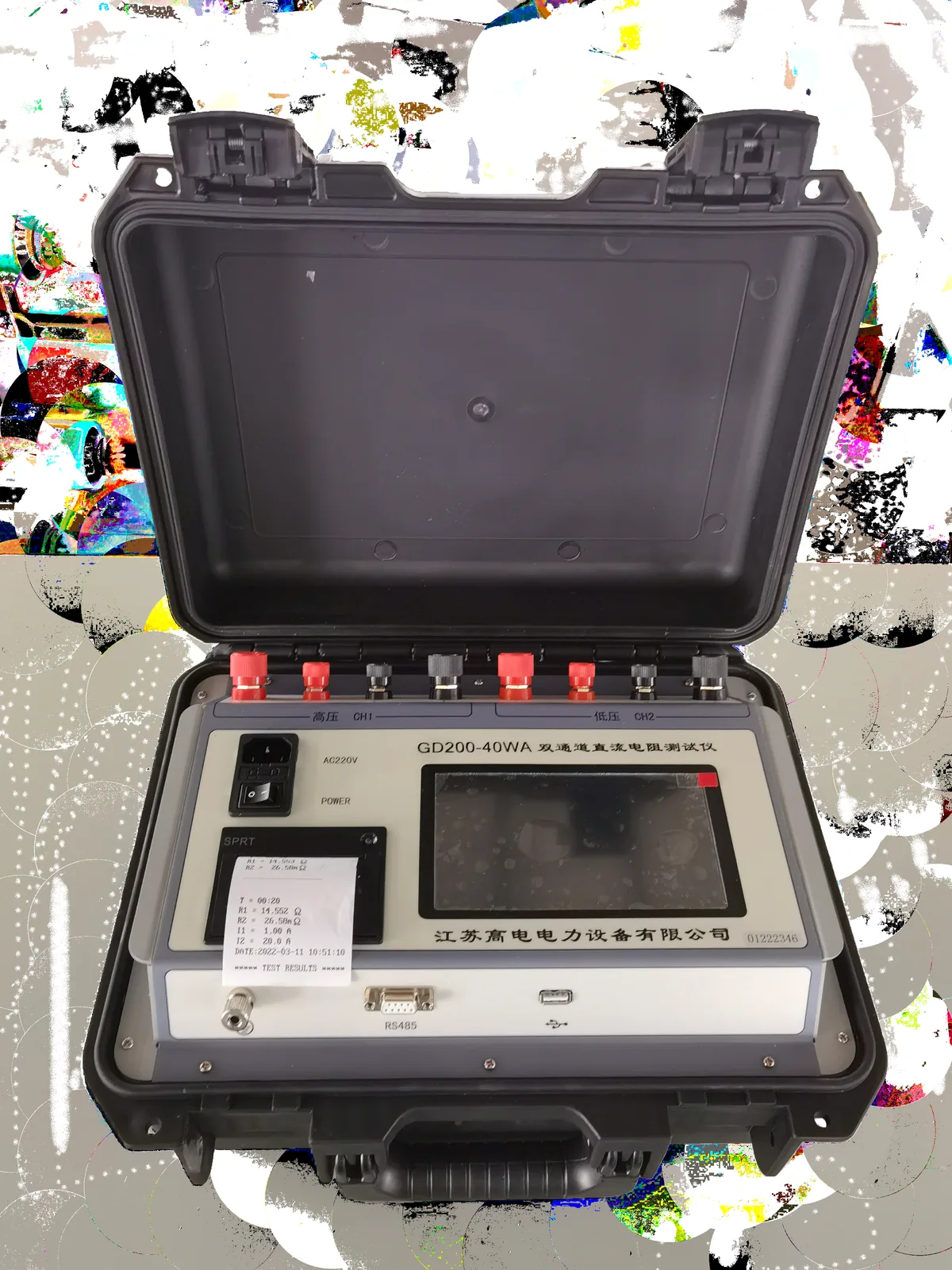
| Portable instruments | One or two items per visit: ratio, resistance, insulation, excitation | Site commissioning, maintenance and fault investigation | Manual cabling per item; records depend on the operator |
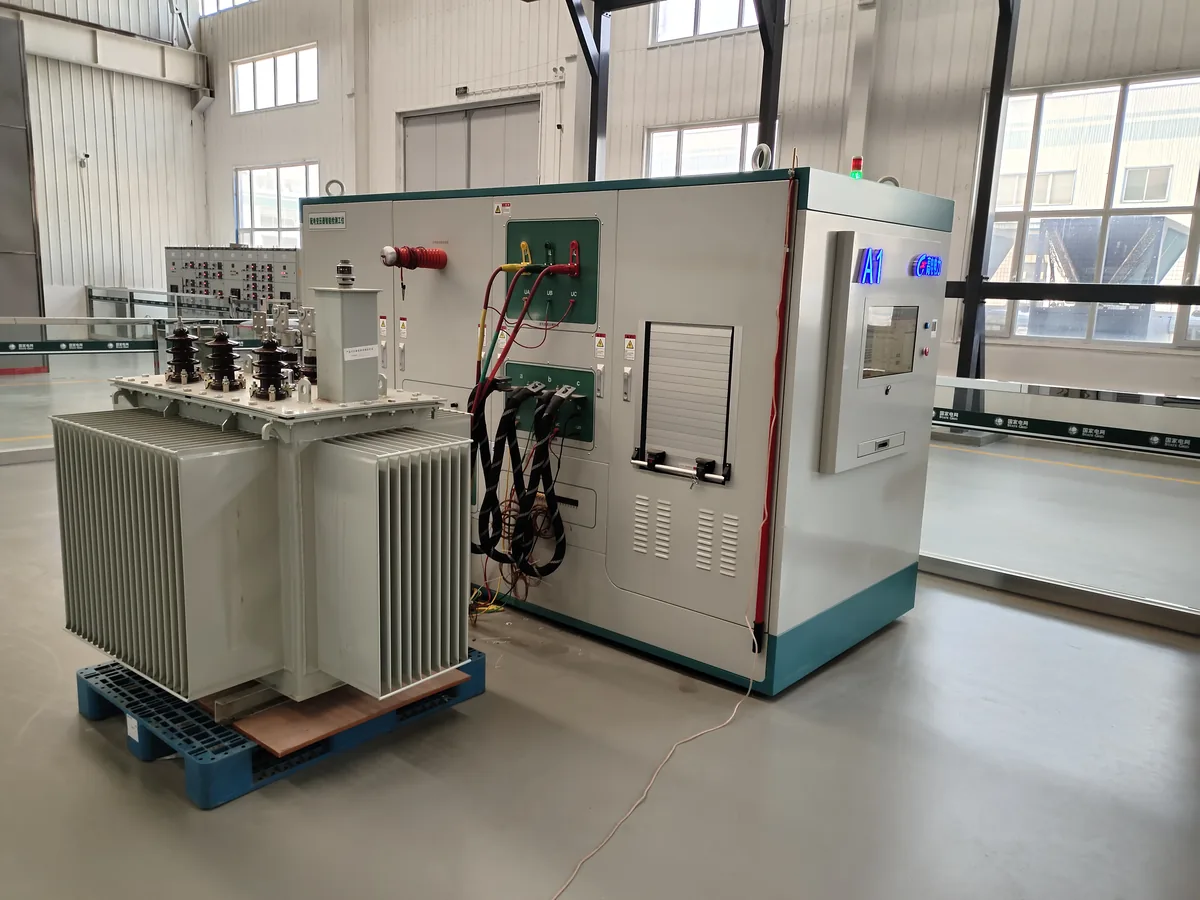
| Mobile test vehicle | A defined item set carried to the site | Fleet maintenance and substation acceptance programmes | Fixed scope; not built for high-throughput batch testing |
| Bench / integrated system (e.g. GDBZ series) | Full routine program at one station, sequenced and documented | Transformer factories, repair workshops, service laboratories | One unit at a time; cycle time set by the slowest step |
| Automated line | Sequenced routine program with automatic handling between stations | Volume production of one or a few transformer types | Highest capital cost; least tolerance for product variation |
| Turnkey test laboratory | Routine, type and special tests up to the specified voltage class | Large factories, national laboratories, third-party testing | Longest lead time; needs the most input on layout and supply |
Sizing rules of thumb for capacity, voltage and throughput
- •Voltage class sets the dielectric side. A bench that must run a power-frequency withstand on a 35 kV class unit and one that must test a 220 kV class unit are different systems. The test voltage follows from the class and from the standard the buyer specifies, not from the kVA rating.
- •Rating sets the current side. Load-loss and winding-resistance tests scale with rated current, so a bench chosen around distribution ratings will run out of current long before it runs out of voltage on a power transformer.
- •Loss measurement needs a stable source and a clean measuring channel. No-load loss is measured at low power factor, so both the source and the instruments have to suit that condition; the method is defined by IEC 60076-1.
- •Temperature rise is a time and source-capacity problem rather than a measurement problem. It usually drives the capacity of the largest benches more than any other single item, because the test has to be held for hours.
- •Allow for the test rig, not only the transformer. A bench sized exactly to the transformer rating, but not to the cables, bushings and connections used to test it, will under-deliver in practice.
- •Throughput, not peak capability, sets the layout. If the routine sheet has eight items and the physical changeover between them is manual, cycle time is governed by the changeover.
- •As a rule of thumb, state three numbers before sizing anything: the highest voltage class, the highest rated current and the longest single test you must perform. Those three govern the specification.
Automation, data management and safety
Automation, data management and report output
Automation on a bench should mean the test sequence, not just the measurement. A useful benchmark is that the operator connects the transformer once and selects the program; everything in between — excitation level, tap changes, DC polarity, settling time before each reading — is handled by the system. Data management then matters more than most buyers expect. The bench should hold the transformer identity, the nameplate data and the standard being applied alongside every result, so a certificate can be reproduced years later without a paper file. Where results have to be traceable, verification of the measurement channels is normally handled under the applicable national metrology regulation — JJG 169 is the relevant one in China for instrument transformer test sets, and equivalent arrangements exist in other markets. On the system side, calibration of the transformers and shunts inside a large bench is a scheduled activity, so the design should allow access to those components without dismantling the bench.
Safety interlocks and site requirements
The dielectric and temperature-rise sections are the ones that justify interlocks, because those are the tests that can hurt someone. A bench able to apply a withstand voltage or to hold a temperature-rise test should enforce the sequence itself: no test voltage before the earth connection is confirmed, no access to the test bay while the source is live, and a controlled discharge to earth before the operator can touch the circuit. Report output deserves to be part of the specification as well, since the format is normally fixed by the customer quality system and is far cheaper to define before the bench is built than to add afterwards. The bench is configured to the standard and report format the buyer specifies.
What a supplier needs from you
- •Test object ratings: transformer types, kVA or MVA range, voltage classes, winding configurations, tap ranges and rated currents.
- •Test items and sequence: the routine sheet, plus any type or special tests the bench must also cover.
- •Standards: the exact editions and standards the reports must reference, and whether the market requires IEC, GB or IEEE documents.
- •Throughput: units per shift or per day, and an acceptable cycle time per unit.
- •Measurement accuracy, plus any calibration or verification regime the results have to satisfy.
- •Lab space and layout: available footprint, ceiling height, working clearances, and whether the bench is fixed or relocatable.
- •Supply and environment: available voltage and current capacity, earthing arrangement, and whether PD or EMC requirements call for shielding.
- •Reporting: certificate format, data retention rules, and whether results must be exported to an existing quality system.
- •Future scope: ratings or test items expected in the next few years, which is cheaper to allow for at the design stage than to retrofit.
The decision usually reduces to three questions: how many units per shift, how many items are on the routine sheet, and how high the voltage class goes. Those three answers separate a portable kit, a bench and an automated line more reliably than any price comparison. Start by writing the routine test sheet with its standard references, add the ratings range, then ask for a configuration that covers the worst case with the sequence automated — and settle the report format before the order, not after it.
Reviewed by the Application Engineering Team at Gaodian Electric Power Co., Ltd
Gaodian Electric Power Co., Ltd designs and manufactures high-voltage test systems for transformer factories, power utilities and third-party laboratories. This guide is a selection reference, not a compliance statement: final equipment configuration and acceptance criteria follow the standard and edition you nominate.