
Power Testing Instruments
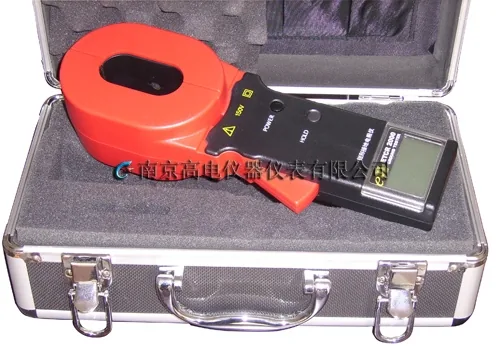
ETCR200 Clamp-on Ground Resistance Tester
Clamp-on ground resistance tester for power, telecom, meteorological and other electrical installations. Measures without auxiliary electrodes, so no disconnection of the grounding conductor and no electrode layout error.
Overview
Clamp-on ground resistance tester for power, telecom, meteorological and other electrical installations. Measures without auxiliary electrodes, so no disconnection of the grounding conductor and no electrode layout error.
Application Scenarios
Request Specifications & Quotation
Tell us your test object ratings, the test items you need and the applicable standards. Our sales engineers reply with a configuration proposal and a formal quotation within 24 hours.
Get a QuoteDetailed Description
Overview: the ETCR200 clamp-on ground resistance tester is used for ground resistance measurement of electrical installations in power, telecommunications, meteorological and other fields. It is available with a long jaw or a round jaw; the long jaw is suited to applications with flat-steel grounding conductors.
Ease of operation: the traditional method requires the grounding conductor to be unfastened and auxiliary ground electrodes to be driven, that is, the electrode under test must be separated from the grounding system and the voltage and current electrodes must be driven into the soil at the prescribed distances as auxiliary electrodes before a measurement can be made. With the clamp meter, the jaw is simply clamped around the grounding conductor under test and the ground resistance is read directly from the LCD screen.
Measurement accuracy: the accuracy of the traditional method depends on the positions of the auxiliary electrodes and their position relative to the ground electrode. If the electrode positions are constrained and cannot match the calculated values, an electrode-layout error results. For one and the same ground electrode, different auxiliary electrode positions can produce a certain scatter in the results, which reduces the credibility of the measurement. The measuring principle used in the clamp meter has been applied successfully abroad for many years: no auxiliary electrodes are used, so there is no electrode-layout error and repeated tests give consistent results. Comparative tests carried out by the relevant national authorities against the traditional voltage-current method have shown that it can replace the traditional ground resistance test method and give credible results, and repeated engineering practice has won user acceptance across different industries and test environments. A standard test loop is supplied with the instrument; the user can measure it first, and if the reading is correct the measured ground resistance value is credible.
Environmental adaptability: the traditional method requires two auxiliary electrodes to be driven at defined relative positions, which is its main limitation. With urban development it is often impossible to find soil around the electrode under test because everything is covered with concrete; even where there are green belts or street gardens, the soil is usually separated from the main body of earth by concrete, and the traditional method additionally imposes a requirement on the relative position of the electrodes, so finding soil at the required distance is in most cases even harder. The clamp meter has none of these limitations. In principle it must be used where a grounding loop exists, and a single-point grounding system cannot be measured with it, but provided the user makes effective use of the surrounding environment, a single-point grounding system can in practice be measured.
Other applications: in some situations the clamp meter can locate grounding faults that cannot be measured by the traditional method. For example, in a multi-point grounding system such as a tower, or in a building that uses more than one ground electrode, the ground resistance of the electrodes may be acceptable while the connecting conductor between the electrode and the overhead ground wire has developed excessive contact resistance or even an open circuit through long service. The electrode resistance then meets the requirement but the grounding system as a whole does not.
Technical Specifications
| Display | 4-digit LCD, 28.5mm high, 47mm wide |
|---|---|
| Jaw size — long jaw | 32mm×65mm |
| Jaw size — round jaw | φ32mm |
| Jaw opening — long jaw | 28mm |
| Jaw opening — round jaw | 32mm |
| Operating temperature | -10℃ - 55℃ |
| Operating humidity | 10% - 90% |
| Weight — long jaw | 1320g (including battery) |
| Weight — round jaw | 1120g (including battery) |
| Power supply | 4 × AA alkaline batteries (6V) |
| Dimensions — long jaw | 293mm L × 90mm W × 66mm H |
| Dimensions — round jaw | 260mm L × 90mm W × 66mm H |
| Protection class | Double insulation |
| Construction | Clamp-jaw type |
| Brand | Gaodian Electric |
Frequently Asked Questions
What is the ETCR200 Clamp-on Ground Resistance Tester used for?
What accuracy advantage does the clamp method give?
How do I get a quotation?
Related Products
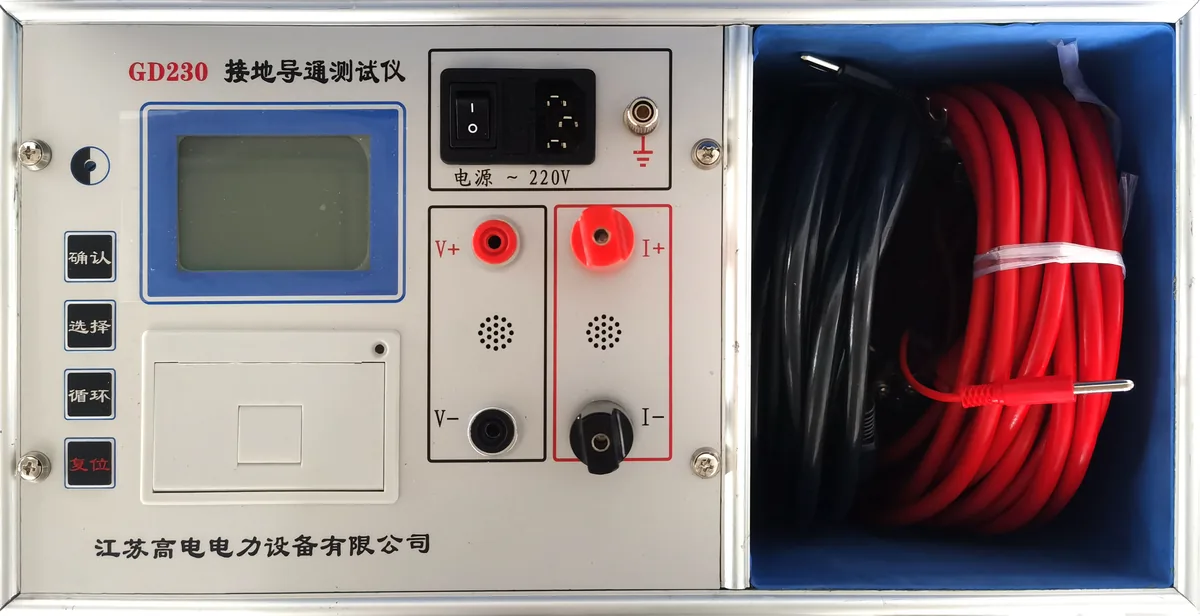
GD230 Ground Continuity Tester
Portable instrument for measuring the continuity resistance between the grounding down conductors of individual items of equipment in a substation. Controlled by a high-performance MCU with automatic current selection, on-board data retention and a thermal printer.
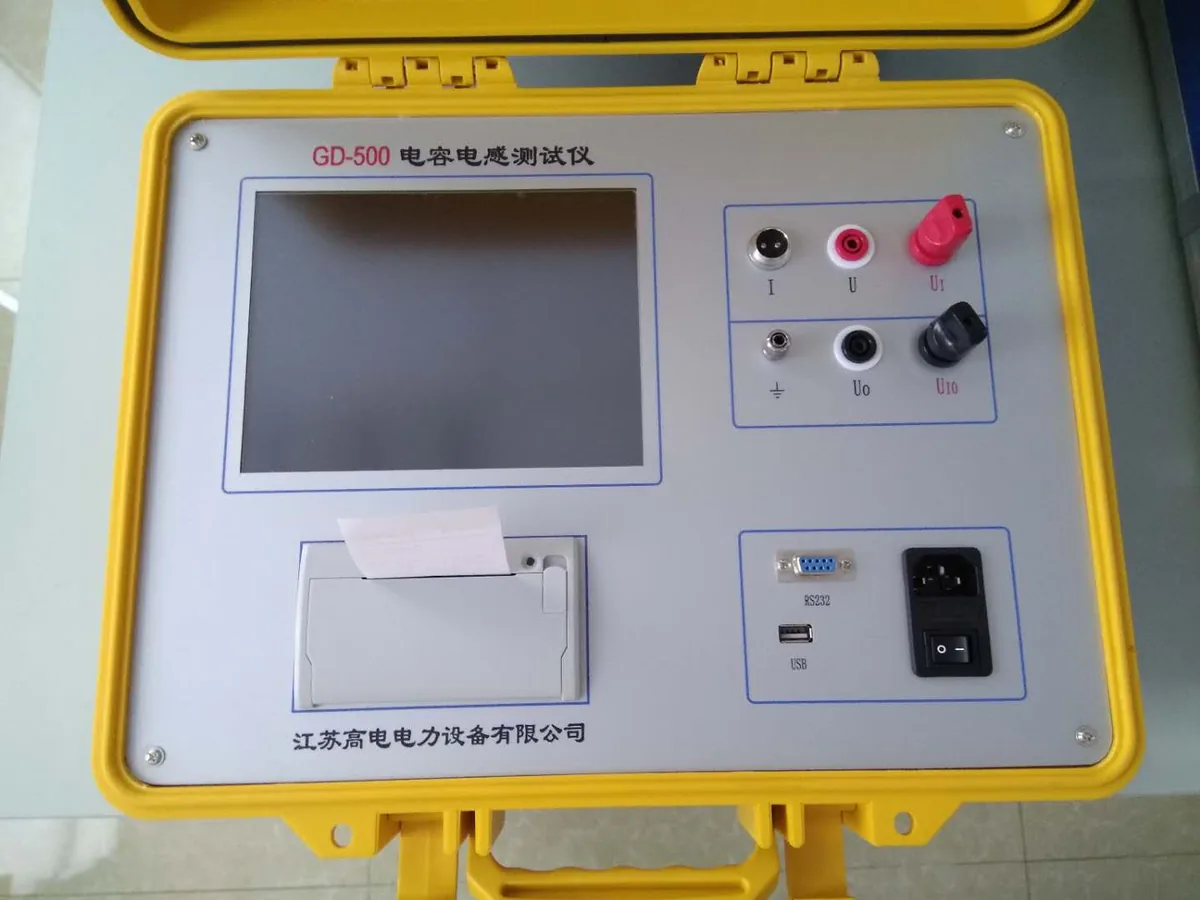
GD-500 Automatic Capacitance & Inductance Tester
Bench instrument for measuring high-voltage shunt capacitor banks of reactive power compensation installations and for reactor measurement, without disconnecting the capacitor leads. Uses four-terminal measurement and provides on-board data storage with USB transfer.
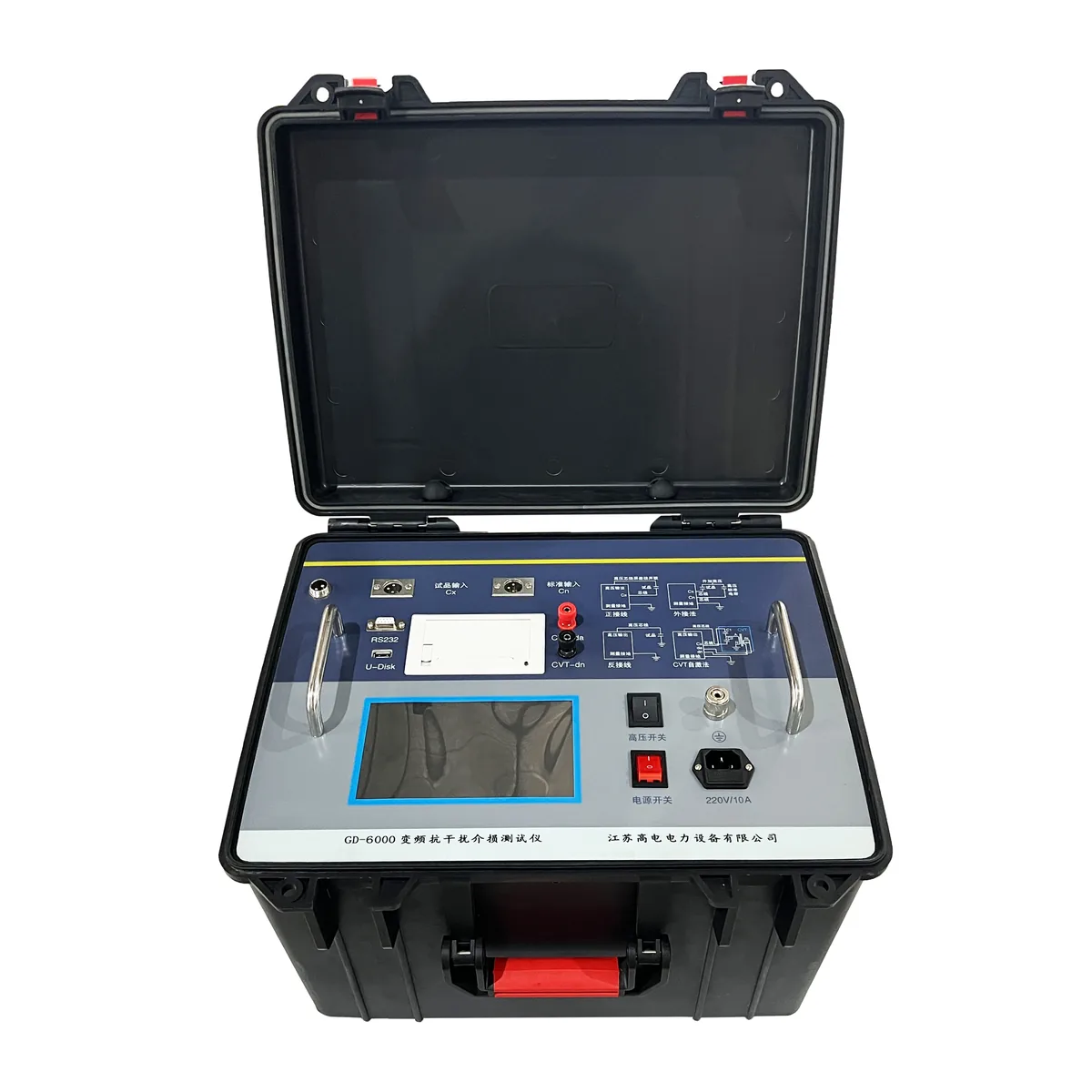
GD6000 Frequency-Shift Dielectric Loss Tester
Fully automatic precision instrument for measuring the dielectric loss tangent and capacitance of high-voltage power equipment at power plants and substations. An internal 45 Hz / 55 Hz source gives accurate results under strong electric-field interference.
Need the datasheet for this model?
Send us this product name plus your test requirements. We reply with specifications, photos and a formal quotation.